Sensory Toys vs Stress Toys: A Complete Buyer’s Guide
Introduction
For global wholesale buyers, toy retailers, therapy suppliers, educational distributors and gift merchandisers, sensory toys and stress toys are two high-growth product lines often grouped together in catalogs. Many procurement teams struggle to distinguish their core positioning, target audiences, application scenarios and sourcing standards, leading to mismatched inventory, low turnover and client complaints.
This buyer’s guide clarifies the core differences between sensory toys and stress toys, breaks down mainstream product categories, outlines target market segmentation, lists critical sourcing checklists, and shares merchandising strategies tailored to different sales channels. All content is built around international B2B purchasing logic, covering certification requirements, material selection, packaging and bulk order considerations to help buyers make data-backed stocking decisions.
Table of Contents
- Core Definition & Fundamental Distinction: Sensory Toys vs Stress Toys
- Full Category Breakdown of Sensory Toys
- Full Category Breakdown of Stress Relief Toys
- Comparative Chart: Sensory Toys vs Stress Toys for Buyers
- Target Customer & Channel Matching Guide
- Global Sourcing Standards & Material Selection Checklist
- Bulk Order & Customization Tips for Wholesale Buyers
- Merchandising & Inventory Optimization Strategies
- Frequently Asked Questions for International Procurement
1. Core Definition & Fundamental Distinction: Sensory Toys vs Stress Toys
What Are Sensory Toys?
Sensory toys represent a broad product category designed to deliver multi-sensory stimulation including tactile, visual, auditory, proprioceptive and oral input. Their primary design goal is sensory regulation, developmental training and sensory processing support. Originating from occupational therapy practices, they serve children with sensory processing disorder, autism, ADHD, toddlers in early education, and adults seeking sensory grounding.
Sensory toys prioritize diverse stimulation modes: texture contrast, light effects, sound feedback, stretch resistance, weighted pressure and chewable surfaces. They focus on long-term developmental and therapeutic value rather than instant emotional relief.
What Are Stress Toys?
Stress toys (also called squeeze toys, anti-anxiety fidget squeezers) are a niche subset of tactile handheld toys centered on compression, stretching and repetitive squeezing motions. Their sole core function is instant tension release, anxiety relief and nervous energy diversion. Most stress toys rely on consistent physical resistance to deliver quick calming effects, with simplified design logic and lower learning thresholds for all age groups.
Key Core Difference
- Sensory toys: Multi-sensory stimulation + developmental/therapeutic value (broad category, multi-scenario use)
- Stress toys: Single tactile compression stimulation + instant stress relief (subcategory under tactile sensory goods, handheld exclusive)
2. Full Category Breakdown of Sensory Toys
Sensory toys cover five major functional branches, each with distinct market demand and procurement positioning:
2.1 Tactile Sensory Toys
Focus on diverse surface textures and hand manipulation feedback
- Textured sensory balls, spiky massage balls, textured worry stones
- Pop tubes, stretch fidget strings, tactile puzzle blocks
- Multi-texture sensory mats and hand training manipulatives
Market fit: Preschool education centers, special therapy clinics, infant retail stores
2.2 Proprioceptive Deep Pressure Toys
Deliver weighted resistance to calm overactive nervous systems
- Weighted lap pads, stretch resistance bands, giant squeeze foam shapes
- Large therapy peanut balls, body compression sacks
Market fit: Special education institutions, pediatric therapy suppliers
2.3 Visual Sensory Toys
Stimulate vision through light, color and slow-motion visuals
- LED light-up fidget cubes, liquid motion bubblers, color-changing sensory orbs
- Glow-in-the-dark textured squeeze figures
Market fit: Gift shops, airport retail, family entertainment venues
2.4 Auditory Sensory Toys
Provide gentle sound feedback for focus regulation
- Silent magnetic slider blocks, soft pop-it bubble sheets, quiet click fidget panels
Market fit: Classroom supply vendors, office stationery wholesalers
2.5 Oral Sensory Chew Toys
Safe chewable tools for users with oral sensory needs
- Silicone chew pendants, textured teething sticks for neurodiverse children
Market fit: Pediatric product distributors, baby specialty retailers
3. Full Category Breakdown of Stress Relief Toys
Stress toys are handheld squeeze-focused products with uniform resistance design, split into four mainstream sublines:
3.1 Classic Stress Balls
Standard round squeeze orbs filled with foam, gel, beads or starch filling
- Solid foam stress balls, bead-filled transparent squeeze balls, gradient spray paint stress balls
- Giant size 8cm stress balls for heavy resistance demand
Target buyers: Corporate promotional gift suppliers, office stationery chains
3.2 Animal-Shaped Squeeze Stretch Toys
Anthropomorphic marine and cartoon shapes with PVA stretch material
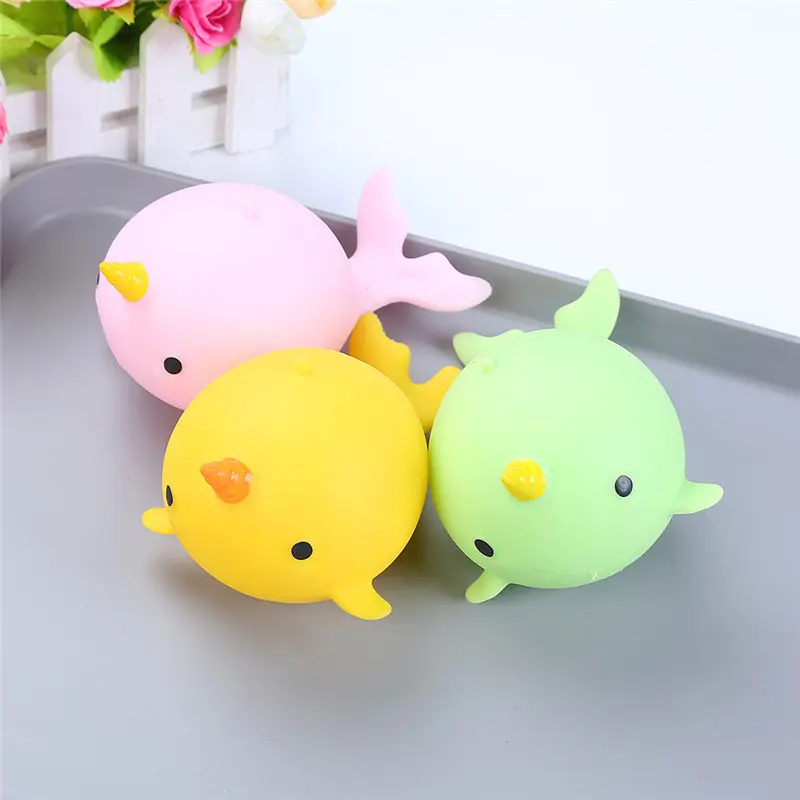
- Whale, dolphin, shark, starfish, fat cat squeeze fidget figures
- Human face stretch squeeze dolls, short hair textured squeeze balls
Target buyers: Toy gift retailers, convenience store impulse merchandise
3.3 Puffer & Meteor Hammer Stress Toys
Textured bumpy exterior with high stretch recovery
- Puffer spike squeeze balls, stress meteor hammer stretch fidgets
Target buyers: Game store wholesalers, holiday gift set packagers
3.4 Geometric Multi-Shape Stress Sets
Multi-piece geometric squeeze kits for bundled retail sales
- Four-shape cube, cone, pyramid stress ball combo packs
Target buyers: Supermarket toy sections, online marketplace bulk sellers
4. Comparative Chart: Sensory Toys vs Stress Toys for Buyers
表格
| Evaluation Dimension | Sensory Toys | Stress Toys |
|---|---|---|
| Core Function | Multi-sensory training, long-term sensory regulation | Instant tension relief via squeezing motion |
| Stimulation Types | Touch, sight, sound, weight, oral (multi-dimensional) | Single tactile compression resistance |
| Product Form Range | Large therapy equipment, small handheld fidgets, chew tools, mats | Exclusively handheld small squeeze items |
| Primary End Users | Toddlers, autistic/ADHD children, therapy patients | All ages: students, office workers, general consumers |
| Application Scenarios | Classrooms, therapy clinics, home early education | Offices, exam rooms, travel, daily carry |
| Customization Focus | Texture, light/sound functions, weighted density | Shape printing, filling material, surface spray paint |
| Certification Priority | EN71, CPC, CPSIA, medical safety standards | EN71, CE, food-grade safe filling material test |
| Wholesale Profit Logic | High unit value, long repeat institutional orders | Low entry price, high turnover impulse buys |
| Inventory Risk | Slow turnover for large therapy equipment | Fast turnover, seasonal gift demand spikes |
5. Target Customer & Channel Matching Guide
Buyers can allocate product inventory by channel based on category positioning:
Channels Prioritizing Sensory Toys
- Special education & occupational therapy suppliers: Weighted sensory tools, textured therapy balls, chew sensory pendants
- Preschool and childcare product distributors: Multi-texture sensory mats, light-up sensory orbs
- Pediatric clinic retailers: Soft multi-sensory fidget sets for neurodiverse children
- Premium baby boutique wholesalers: Teething tactile sensory manipulatives
Channels Prioritizing Stress Toys
- Office stationery & corporate gift vendors: Plain stress balls for brand custom printing
- Convenience store & supermarket impulse aisles: Mini animal squeeze toys, puffer balls
- Holiday gift set packagers: Mixed geometric stress ball bundles
- Student stationery retailers: Pocket-sized stretch squeeze marine animal toys
Dual-Channel Mixed Inventory
Online marketplace sellers, airport gift shops and general toy wholesalers can stock both lines: sensory core sets as high-margin main products, stress squeeze toys as low-price traffic-driving add-ons.
6. Global Sourcing Standards & Material Selection Checklist
6.1 Core Material Options (For Both Product Lines)
- PVA stretch material: High elasticity, fast recovery, mainstream for animal squeeze stress toys
- Silicone: Hypoallergenic, washable, ideal for oral sensory chew toys
- Foam/gel/bead/starch filling: Adjustable resistance for stress ball customization
- Non-toxic spray paint: Custom color printing for exterior decoration
6.2 Mandatory International Certifications (Non-Negotiable for Bulk Imports)
All products must pass global toy safety standards to avoid customs detention:
- CE & EN71 (EU market mandatory)
- CPC & CPSIA (North America market mandatory)
- BSCI factory audit certification (for large retail chain buyers)
6.3 Material Safety Inspection Checklist for Buyers
- No BPA, lead, phthalates or harmful plasticizers
- Filling materials non-toxic, leak-proof sealed seams
- Hypoallergenic surface coating for skin-contact products
- No detachable small choking hazards for children under 3
6.4 Differentiated Sourcing Focus
- Sensory toys: Prioritize material diversity, texture layers and safety certification for therapeutic use
- Stress toys: Prioritize stretch recovery durability, uniform squeezing resistance and low-cost bulk production
7. Bulk Order & Customization Tips for Wholesale Buyers
Customization Options for Stress Toys
- Shape customization: Custom animal, cartoon, brand mascot squeeze molds
- Filling customization: Switch between sand, water, beads, PVA internal filling
- Surface processing: Custom spray paint, logo printing, gradient color matching
- Size customization: Mini pocket size, standard 6cm, giant 8cm large stress balls
Customization Options for Sensory Toys
- Multi-sensory function upgrade: Add LED lighting, soft sound modules
- Weight adjustment: Modify weighted core density for deep pressure therapy tools
- Texture mold development: Custom bumpy, ribbed, smooth surface designs
- Combo set packaging: Mix multiple sensory types into retail gift packs
Bulk Order Cost Control Tips
- Standard stock molds reduce mold development fees; custom molds apply MOQ requirements
- Environmentally friendly raw material bulk procurement lowers unit cost for long-term orders
- Combined shipment of sensory and stress toy mixed containers optimizes logistics fees
8. Merchandising & Inventory Optimization Strategies
Retail Shelf Layout Suggestions
- Separate shelf zones: Sensory Therapy Zone and Stress Relief Fidget Zone to avoid consumer confusion
- Cross-selling matching: Pair sensory therapy kits with mini stress squeeze toys as add-on promotions
- Age grouping display: Infant sensory products on low shelves, adult office stress toys on checkout counters
Seasonal Inventory Adjustment
- Back-to-school season: Boost stock of quiet sensory fidgets and classroom stress balls
- Holiday gift seasons: Increase bundled stress toy sets and themed animal squeeze figures
- Therapy institution procurement cycles: Restock large sensory equipment quarterly
Inventory Risk Reduction
- Stress toys: Small MOQ trial orders for new animal shapes due to fast fashion toy trends
- Sensory therapy toys: Stable long-term bulk orders with institutional clients to stabilize inventory turnover
9. Frequently Asked Questions for International Procurement
Q1: Can I market stress toys as sensory toys to expand sales?
A: Partial cross-selling is allowed, but product labeling must not mislead buyers. Stress squeeze toys fall under tactile sensory goods, but large therapeutic sensory equipment cannot be marketed as simple stress relief items. Institutional therapy buyers require clear functional classification for procurement compliance.
Q2: What is the biggest quality defect risk for bulk stress toy orders?
A: Poor sealing causing filling leakage, low-quality PVA material losing stretch elasticity after repeated squeezing, and toxic surface paint failing safety tests. Buyers should arrange third-party pre-shipment inspection for filling tightness and material safety.
Q3: Which line has higher long-term market growth?
A: Sensory toys show steady compound growth driven by global special education and pediatric therapy demand with stable institutional repeat orders. Stress toys rely on consumer impulse consumption, with higher seasonal volatility but faster capital turnover for small-batch retailers.
Q4: Are eco-friendly materials a mandatory purchasing consideration for Western markets?
A: Major European and North American retail chains require eco-friendly, recyclable raw materials and minimal plastic packaging. Buyers targeting these regions should prioritize suppliers with sustainable production practices and green material certification.
Q5: What packaging solutions suit cross-border wholesale?
A: Small stress toys: Opp bag bulk packaging for cost efficiency; gift retail versions: color paper box individual packaging. Sensory therapy sets: Hard cardboard gift boxes with product function instruction inserts for institutional buyers.
Post time: Jun-29-2026