How to Reduce Cost When Buying Stress Balls in Bulk
For retailers, event planners, corporate procurement teams and resellers, stress balls are always a popular inventory choice. These versatile fidget toys work perfectly for corporate giveaways, party favors, school supplies and daily retail sales. While bulk purchasing inherently brings price advantages, many buyers still struggle with hidden expenses, inflated unit prices and unnecessary extra costs. This guide shares practical, actionable strategies to cut total costs significantly when sourcing stress balls in large quantities, helping you maximize profit margins without compromising product quality.
Understand Tiered Pricing and Optimize Order Quantities
Nearly all stress ball suppliers adopt tiered pricing models, where the per-unit price drops sharply as the order volume increases. This is the most fundamental rule for bulk cost reduction, and mastering it can create immediate savings for your procurement plan.
Most suppliers set clear minimum order quantities (MOQs) and tiered price breaks. For example, orders under 250 pieces usually carry the highest unit price; orders ranging from 250 to 1,000 pieces unlock moderate discounts; and bulk orders over 1,000 pieces enjoy the lowest factory-direct rates, with per-unit costs potentially cut by 40% to 60% compared to small-batch purchases. Before finalizing your order, carefully check the pricing tiers. If your planned quantity is just a small number short of the next discount tier, slightly increasing your order volume is a wise investment. The small extra purchase will lead to a lower overall unit cost for the entire order, bringing far more savings than the additional spending.
Meanwhile, combine scattered short-term demands to form larger consolidated orders. Many businesses place multiple small orders throughout the year due to scattered departmental needs or frequent restocks. Each separate order generates extra administrative fees, handling charges and repeated shipping costs. Integrating monthly or quarterly demands into one large bulk order not only qualifies for deeper tiered discounts but also cuts down repetitive transaction costs, which can reduce overall procurement expenses by 20% or more in the long run.
Select Cost-Effective Materials and Standard Designs
Material selection directly determines the production cost of stress balls, and choosing appropriate materials based on your usage scenarios is an effective way to avoid overspending on excessive material performance.
Polyurethane (PU) foam is the most mainstream and cost-efficient material for regular stress balls. It features low raw material costs, stable quality and good squeezing elasticity, fully meeting the daily stress-relief needs of most users. PU stress balls are also lightweight, which helps control shipping costs for large shipments, making them the top choice for budget-focused bulk buyers. If you do not have special functional requirements, stay away from high-cost materials such as pure silica gel, complex composite filling materials or customized LED luminous components. These premium materials will push up the unit price substantially, and the extra functions are unnecessary for conventional sales or giveaways.
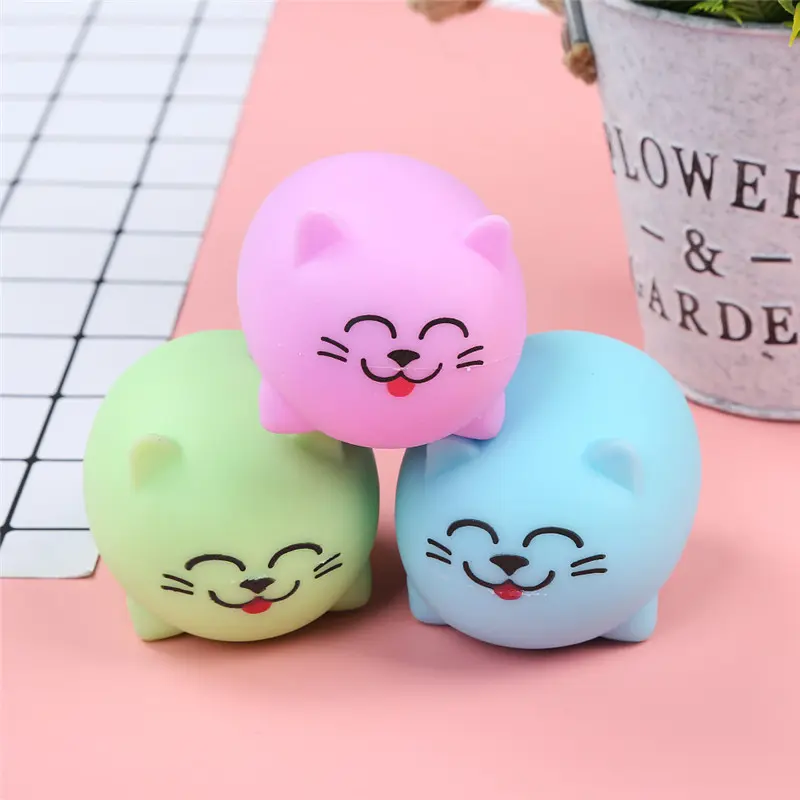
In terms of design, standard regular shapes always beat customized styles in cost control. Round basic stress balls, classic animal shapes like whales, dolphins and cats, and common geometric styles are all mature standard products from manufacturers. These items have mature production lines, no extra mold opening fees and stable output efficiency, so their prices stay at a reasonable level. Customized exclusive shapes, complex 3D sculptures or special surface craftsmanship require manufacturers to develop new molds and adjust production processes, adding high one-time mold costs and prolonging production cycles. Unless customized products are core to your brand promotion, prioritize ready-made standard designs to eliminate hidden development costs.
If you need printed logos or patterns for promotional use, choose simple screen printing instead of complex full-color printing or embossing. Simple printing processes have low processing fees and fast production speed, while sophisticated printing technologies will increase both production time and unit cost.
Optimize Shipping and Logistics Costs
Logistics is one of the biggest hidden costs in bulk purchases of stress balls. Lightweight and large in volume, stress balls easily lead to high freight fees if the logistics plan is not properly arranged. Optimizing shipping solutions can slash a large portion of your total expenditure.
First, prioritize full-container or full-carton consolidated shipping for large orders. Split small-batch shipments will generate multiple handling fees and separate freight charges. When placing orders, communicate with suppliers to pack goods with standard carton specifications, and make full use of carton space to avoid empty volume. Reasonable packing reduces the total shipping volume, thus cutting freight fees effectively. For long-term cooperative buyers, you can negotiate with suppliers to combine multiple batches of goods for consolidated delivery according to your inventory cycle, reducing the frequency of transportation.
Second, compare multiple logistics channels reasonably. For cross-regional or cross-border procurement, different freight forwarders and transportation methods have obvious price gaps. Sea freight is the most cost-effective option for super-large bulk orders with no tight delivery time limits; for time-sensitive orders, select economical land transportation or regular air freight instead of express delivery services with high premiums. In addition, negotiate shipping terms with suppliers actively. Many manufacturers offer free shipping or subsidized freight for orders that reach a certain volume threshold. Try to hit the free shipping quantity standard to completely eliminate logistics costs.
It is also worth noting that avoid scattered delivery requirements. Multiple split deliveries will increase suppliers’ sorting and delivery costs, and these costs will eventually be passed on to buyers. Stick to unified delivery to keep logistics costs stable.
Negotiate Favorable Terms with Reliable Suppliers
Long-term communication and reasonable negotiation with suppliers can help you gain more preferential policies on the premise of ensuring product quality. This skill is essential for bulk procurement buyers.
Before negotiation, fully research the market quotation of similar stress balls. Understand the price range of products with the same materials, sizes and designs from different suppliers, so that you have a clear price baseline during communication and avoid being quoted an inflated price. When negotiating, do not merely focus on a one-time price reduction. If your business has stable annual procurement volume, take the initiative to propose long-term cooperation intentions. Suppliers prefer stable recurring orders, and they are willing to offer more stable low prices, seasonal discounts or priority production rights for long-term partners.
For large-volume one-time orders, you can also try combined negotiation. If you need to purchase multiple types of stress balls such as puffers, stretch toys and meteor hammer stress relief toys, merge all categories into one order to negotiate an overall discount. The larger the total order amount, the stronger your bargaining power. Besides unit prices, negotiate additional favorable terms like flexible payment cycles, free product samples and a reasonable after-sales compensation mechanism. Appropriate payment terms can optimize your capital flow and reduce capital occupation costs; free samples help you complete quality inspection without extra spending.
It is not recommended to blindly pursue ultra-low prices by switching suppliers frequently. Long-term cooperative suppliers can maintain stable product quality and production cycles, avoiding additional losses caused by defective goods, delayed delivery and repeated supplier screening. Choosing factories with complete qualifications and mature production systems ensures cost stability in the long run.
Rationalize Inventory Management to Reduce Hidden Losses
Unreasonable inventory management will bring invisible cost losses, which are easily ignored by many bulk buyers. Scientific inventory planning can help you avoid waste and further control comprehensive costs.
Stress balls are non-perishable fidget toys with a long shelf life, so moderate bulk stocking is feasible, but overstocking must be avoided. Excessive inventory will occupy warehouse space and tie up a large amount of working capital. Calculate the average monthly sales volume or usage demand based on historical sales data, and formulate a targeted bulk purchase plan. Match the order quantity with the inventory consumption speed to maintain inventory at a reasonable level, reducing warehouse rental costs and capital occupation costs.
For products with multiple styles and sizes, allocate inventory reasonably according to market demand. Hot-selling classic styles and regular sizes can be stocked in larger quantities to obtain lower bulk prices; for niche styles and special sizes with low demand, control the order volume to prevent slow-moving inventory. Slow-selling goods will depreciate over time and eventually become losses.
In addition, establish a regular quality inspection mechanism. Conduct random inspections on the goods after receiving large batches of stress balls to screen out defective products such as deformed, damaged or poorly filled items. Timely return or exchange of defective goods in accordance with the cooperation agreement can avoid economic losses caused by defective products flowing into sales or use links.
Source Mixed Bulk Orders and Group Purchasing
If your single order volume cannot reach the highest discount tier temporarily, group purchasing or mixed ordering is a practical cost-saving method.
You can cooperate with peer buyers, retailers or corporate procurement teams with the same demand to form a group purchase. Multiple buyers combine their orders to increase the total purchase volume, jointly enjoy the lowest tiered price and share shipping costs. This method allows every participant to get a lower unit price without increasing their own inventory pressure, and the overall cost can be reduced by 10% to 20%.
Many suppliers support mixed bulk orders, which means you can mix different styles, sizes and types of stress toys in one order to reach the discount quantity standard. For example, mix regular stress balls, puffer balls and stretch toys together. This way, you can enrich your product categories while meeting the supplier’s bulk order requirements, achieving cost reduction and diversified inventory at the same time. When placing mixed orders, confirm with suppliers in advance whether there is a unified preferential price for mixed batches to ensure the cost advantage of combined ordering.
Final Thoughts
Cutting costs when buying stress balls in bulk is not simply about forcing suppliers to lower unit prices. It is a comprehensive optimization covering order volume planning, product selection, logistics, supplier cooperation and inventory management. Start with tiered pricing to maximize the advantages of bulk orders, select cost-effective materials and standard designs to eliminate unnecessary production costs, optimize logistics solutions to control transportation expenses, negotiate long-term favorable terms with reliable suppliers, and match scientific inventory management and flexible group purchasing methods.
By combining these strategies, you can steadily reduce the total procurement cost of stress balls while keeping product quality stable. Whether you are a large-scale reseller, a corporate procurement manager or an event supplier, these methods can help you create a more competitive cost system and gain more advantages in market operation.
Post time: Jun-08-2026