How to Package Stress Balls for Retail & Wholesale
Stress balls have become one of the most popular fidget toys globally, favored by consumers for stress relief and daily entertainment. Proper packaging is the core link connecting product display, transportation safety, market sales and brand value. Whether for retail shelf display or wholesale bulk distribution, standardized and targeted packaging can effectively reduce damage, enhance product attractiveness, and meet international market certification and environmental requirements.
Table of Contents
1 Core Principles of Stress Ball Packaging
2 Common Packaging Types for Retail & Wholesale
3 Material Selection for Stress Ball Packaging
4 Essential Labeling & Certification Mark Requirements
5 Packaging Solutions for Different Specifications
6 Environmental & Sustainable Packaging Practices
7 Advanced Tips to Optimize Packaging Cost & Logistics
8 Custom Packaging for Brand Differentiation
1 Core Principles of Stress Ball Packaging
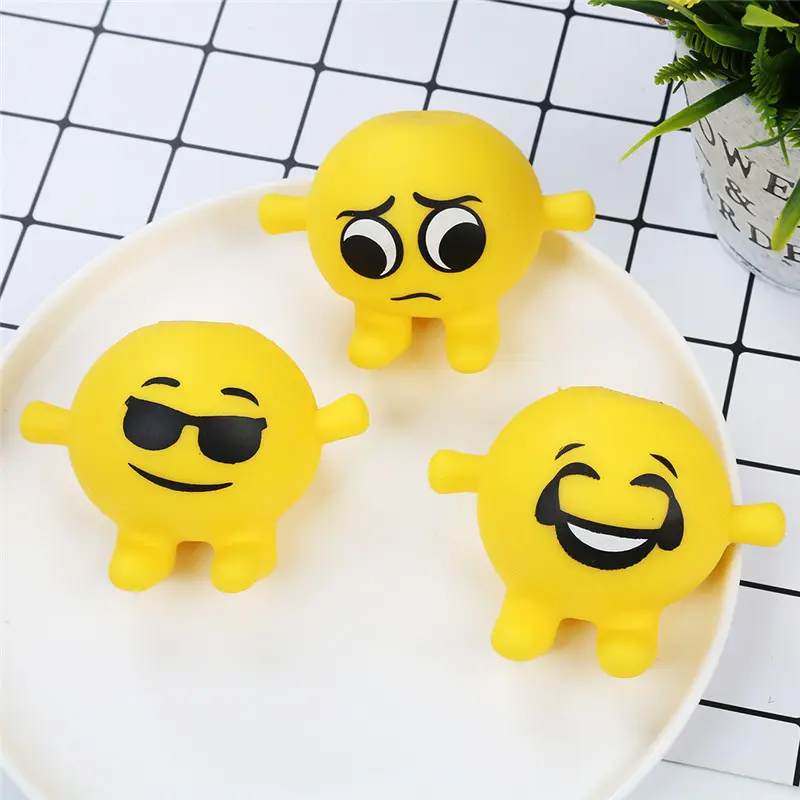
Understanding the core packaging principles is the premise to meet retail and wholesale demands. Stress balls are mostly made of PVA, starch, beads and other soft filling materials, featuring elasticity and extrusion resistance, so packaging must balance protection, display, economy and compliance.
Protection priority is the first rule. The packaging needs to avoid extrusion, deformation, leakage of internal fillers and surface scratches during storage, transportation and shelf placement. Reasonable space control should be maintained to prevent excessive gaps causing product shaking, while avoiding over-packaging that squeezes the stress ball.
Display adaptability matters a lot. Retail packaging needs to adapt to supermarket shelves, gift shops and online retail display scenarios, highlighting product shape, color and features. Wholesale packaging focuses on stacking convenience and unit quantity standardization to facilitate warehousing and secondary distribution.
Cost and logistics balance is essential. Packaging size, material thickness and structural design should match logistics transportation standards, reduce container space waste, and control packaging costs within a reasonable range without sacrificing quality.
Global compliance is indispensable. All packaging must conform to international toy safety standards such as EN71, CE, CPSIA and BSCI, meeting market access rules of different regions.
2 Common Packaging Types for Retail & Wholesale
Different sales scenarios correspond to exclusive packaging styles, each with unique advantages and applicable crowds, helping buyers quickly match demands.
表格
| Packaging Type | Applicable Scenario | Feature Advantage | Unit Specification | Display Effect |
|---|---|---|---|---|
| Blister Card Packaging | Single retail, supermarket shelf | Sealed and dustproof, intuitive product display, easy to hang | Single piece per set | High visibility, suitable for mainstream retail |
| Opp Bag with Header | Online retail, convenience store | Lightweight and low-cost, customizable header logo | Single / 2-3 pieces per bag | Simple and flexible, cost-effective |
| Color Box Packaging | High-end retail, gift sales | Exquisite printing, brand texture, shockproof structure | Single piece per box | Premium grade, suitable for gift market |
| Bulk Polybag Packaging | Wholesale bulk order, distributor distribution | Large capacity, compression resistance, easy stacking | 50/100 pieces per bag | No single display, focus on logistics |
| Carton Inner Tray Packaging | Mixed specification wholesale, supermarket bulk supply | Fixed placement, anti-extrusion, neat classification | 20/50 pieces per carton | Standardized arrangement, convenient secondary sales |
| Window Gift Box | Custom gift, promotional gift | Transparent window design, delicate appearance | 1 set of multi-style stress balls | High-end positioning, suitable for corporate customization |
Blister card and color box are the mainstream choices for retail, while bulk polybag and carton inner tray are the preferred solutions for wholesale distributors. Buyers can select according to sales channels and positioning.
3 Material Selection for Stress Ball Packaging
Material directly determines packaging protection performance, safety level and environmental attributes. Stress ball packaging materials need to be non-toxic, odorless, flexible and compatible with toy safety standards.
Plastic materials are widely used. PVC blister is transparent and hard, good for fixing single stress ball; OPP/PE plastic bags are lightweight and waterproof, suitable for bulk and simple retail packaging; PET environmentally friendly plastic has high toughness, meeting global environmental protection requirements.
Paper materials focus on texture and environmental protection. Coated paper and kraft paper are used for color boxes and header cards, with good printing performance for brand logos and product information; Corrugated carton is the outer packaging for wholesale, with strong compression and drop resistance, suitable for long-distance transportation.
Filling auxiliary materials play a protective role. Bubble wrap, foam particles and paper lining are used for gap filling in color boxes and wholesale cartons, effectively preventing product deformation during transportation. All materials can be customized with environmentally friendly degradable options to adapt to the sustainable development trend.
4 Essential Labeling & Certification Mark Requirements
Complete labeling and certification marks are mandatory for stress balls to enter global retail and wholesale markets, and also the key inspection standard for procurement merchants.
Basic product information must be marked clearly, including product name, material composition, size specification (such as 8cm giant stress ball), filling type (PVA, starch, etc.) and applicable age. The font size should be moderate and the printing clear, convenient for consumers and distributors to identify.
Safety certification marks are indispensable. Packaging surface needs to print EN71, CE, CPSIA, CPC and other international certification logos, proving that the product meets safety, non-toxic and environmental protection standards. Wholesale bulk outer cartons should be marked with certification marks in batches to facilitate customs clearance and market inspection.
Logistics and warning labels cannot be omitted. Wholesale outer packaging needs to mark gross weight, quantity, production address, fragile and moisture-proof signs; retail packaging should add anti-choking warning labels to remind that the product is not suitable for young children under 3 years old.
Brand and customization information can be printed on packaging surface. Custom logos, pattern designs and product feature introductions are supported to help buyers build personalized brand competitiveness.
5 Packaging Solutions for Different Specifications
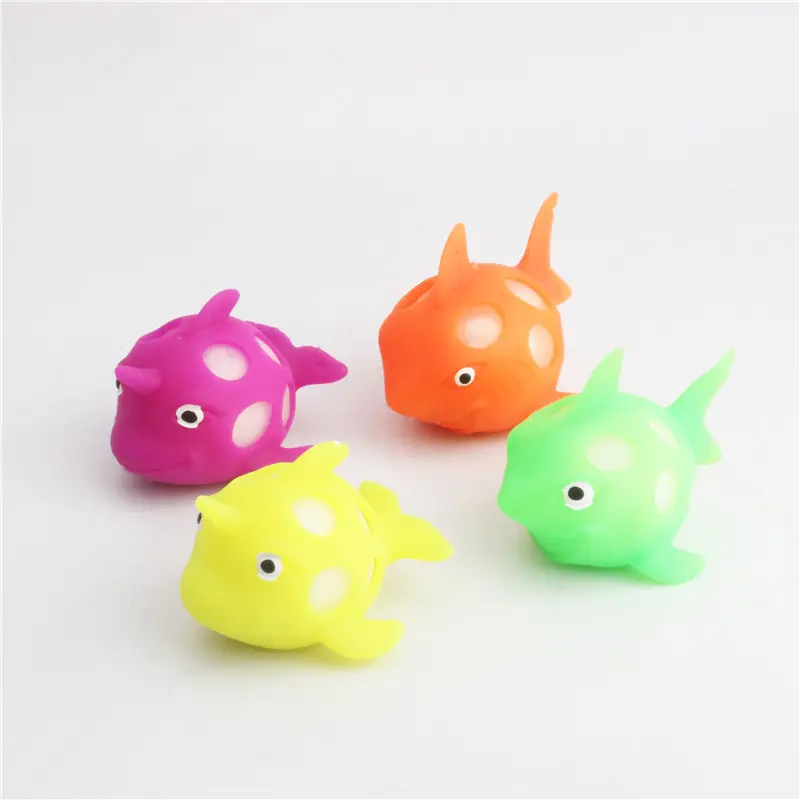
Stress balls have diverse shapes and sizes, including spherical, animal-shaped (whale, dolphin, shark, cat), geometric and meteor hammer shapes. Different specifications need targeted packaging design.
Mini size (3-5cm) stress balls are suitable for opp bag header packaging and blister card single packaging. Multiple pieces can be combined into gift sets for retail, and bulk polybag packaging for wholesale with 100 pieces per bag.
Giant size (8cm and above) stress balls are large in volume, easy to deform. It is recommended to use color box with foam lining or independent blister packaging. Wholesale adopts single-layer carton inner tray to avoid stacking extrusion.
Special-shaped stress toys such as animal modeling and meteor hammer are irregular in shape. Customized fixed blister or window color box is adopted for retail; wholesale uses partition carton packaging to isolate products and prevent surface friction damage.
Mixed style wholesale goods need classified packaging. Different shapes and sizes are placed in separate inner trays of the carton, with clear quantity labels on the outside, facilitating distributors’ secondary classification and sales.
6 Environmental & Sustainable Packaging Practices
Global retail and wholesale markets are paying more attention to environmental packaging, and eco-friendly packaging has become an important assessment factor for procurement cooperation.
Adopt degradable packaging materials. Replace traditional non-degradable plastic bags with biodegradable PLA plastic bags, and use recycled kraft paper for color boxes and outer cartons, reducing plastic pollution.
Control packaging layers and avoid over-packaging. Follow international over-packaging restrictions, control retail packaging layers within 3 layers, and wholesale packaging simplifies redundant structure without excessive filler stacking.
Simplify printing and low-carbon production. Use environmentally friendly soy ink for packaging printing, reduce excessive color decoration, and adopt single composite material for easy recycling and reuse.
Unified reusable outer cartons for wholesale. Standardize wholesale carton size and structure, which can be reused for multiple logistics turnover, reducing packaging cost and resource waste for long-term distributors.
7 Advanced Tips to Optimize Packaging Cost & Logistics
For retail sellers and wholesale distributors, optimizing packaging can reduce logistics costs, improve storage efficiency and enhance market competitiveness.
Unify standardized packaging sizes. Match retail single packaging and wholesale outer carton sizes with international container and shelf standard sizes, maximize space utilization, and reduce logistics and warehousing space waste.
Optimize packaging weight. Select lightweight high-strength materials, reduce unnecessary filler weight, lower overall freight cost by controlling single package weight.
Integrate packaging and labeling. Complete product labels, certification marks and logistics identification printing on packaging in one step, avoid secondary labeling, save labor and time cost.
Batch customized packaging cooperation. Long-term procurement buyers can customize unified packaging styles and specifications in batches, obtain lower packaging unit prices, and maintain consistent brand image.
8 Custom Packaging for Brand Differentiation
Custom packaging is an effective way to stand out in the homogeneous stress ball market, suitable for retail brand sellers and customized wholesale buyers.
Custom appearance design. Support personalized printing of brand logos, exclusive patterns and color matching on blister cards, color boxes and header cards, forming unique brand visual recognition.
Structural customization. Design special-shaped window boxes, hanging card structures and gift set packaging according to product positioning, adapt to high-end retail and corporate gift customization demands.
Function customization. Add anti-fall sealing structure, reusable zip-lock bag design to retail packaging, improve product user experience and secondary utilization value.
Batch customized matching service. Manufacturers provide one-stop service from packaging design, material selection to batch production, matching stress ball products, reducing buyers’ multi-party docking trouble.
Conclusion
Packaging is not only the protective shell of stress balls, but also the key factor affecting retail sales and wholesale circulation efficiency. From core principles, packaging types, material selection to labeling compliance, environmental protection and customized design, every link needs to fit the habits of global buyers and market rules.
Reasonable retail packaging can enhance shelf display attractiveness and boost terminal sales; standardized wholesale packaging can reduce product damage, optimize logistics costs and facilitate secondary distribution. Choosing matched packaging solutions according to product specifications and sales channels, and combining environmental protection and customized design, can help buyers gain greater competitive advantages in the global stress ball market.
Post time: May-27-2026