Custom Stress Balls with Logo: Complete Buyer’s Guide
Table of Contents
- Why Custom Logo Stress Balls Are Highly Effective Marketing Gifts
- Core Materials & Properties of Custom Stress Balls
- Complete Guide to Shapes, Sizes & Fillings
- Logo Printing Methods Comparison & Effect Guide
- Key Safety Standards & International Certifications
- MOQ, Lead Time & Cost Control
- Design & Sampling Tips
- Packaging, Shipping & Storage Recommendations
- FAQs
- Conclusion
Why Custom Logo Stress Balls Are Highly Effective Marketing Gifts
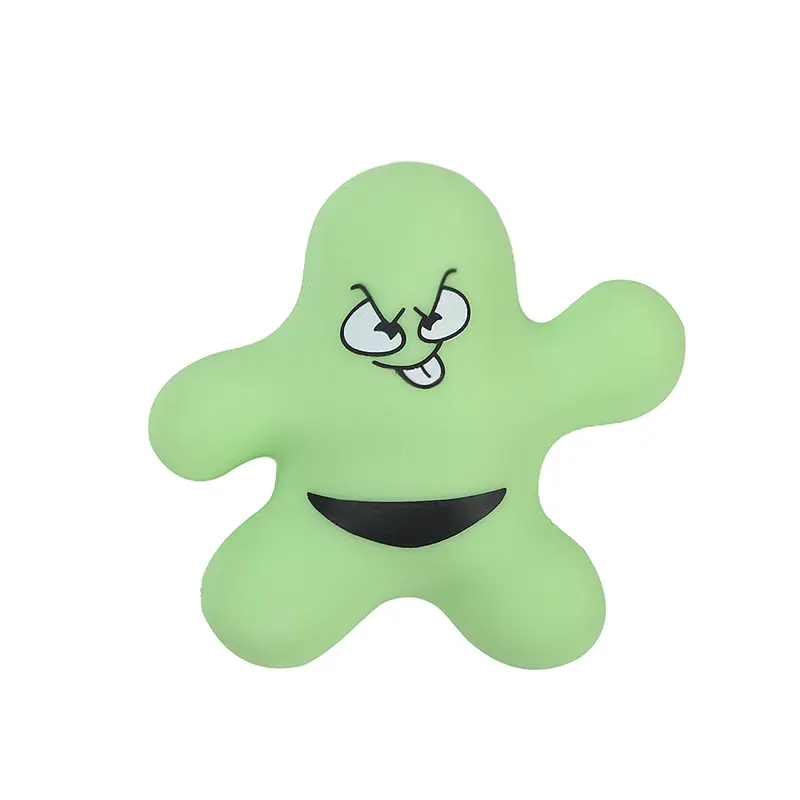
Custom logo stress balls are among the most popular practical gifts for global businesses, trade shows, organizations, and promotional campaigns. They offer four major advantages: low cost, high visibility, long retention, and strong engagement. Unlike disposable flyers, stickers, or short-term supplies, stress balls are carried and used repeatedly for a long time—every squeeze reinforces your brand. They work perfectly as trade show giveaways, staff welfare gifts, client appreciation items, event souvenirs, educational and medical merchandise, etc.
For buyers, they feature flexible MOQs, stable delivery, lightweight shipping, and smooth customs clearance, making them a low-risk, high-return category for cross-border gift sourcing.
Core Materials & Properties of Custom Stress Balls
Material directly determines handfeel, durability, safety, and print quality—it is the top purchasing decision.
- PU Foam (Polyurethane)
The most popular material, available in slow rebound or fast rebound. Fine surface, clear printing, strong durability, eco-friendly and odorless, compliant with EU and US toy safety standards. Ideal for most business gifts.
- TPR / Soft Rubber
Higher elasticity, smooth and soft touch, supports transparent/translucent effects, tear-resistant. Great for stretch-style stress toys. Print adhesion is slightly lower than PU.
- Silicone
Food-grade safe, soft and skin-friendly, heat-resistant for sterilization. Higher cost, used for premium gifts, children’s or medical-related items.
- EVA / Foam Composite
Lightweight, shatterproof, low cost. Suitable for large-size, low-budget promotions. Mostly printed with pad print or heat transfer.
Buyer tip: Choose PU for EU & US markets for the best balance of safety, handfeel, and printability.
Complete Guide to Shapes, Sizes & Fillings
Common Sizes
- 5cm / 6.3cm (2.5 inches): Classic portable, most universal
- 7cm / 8cm: More visible at events, fuller handfeel
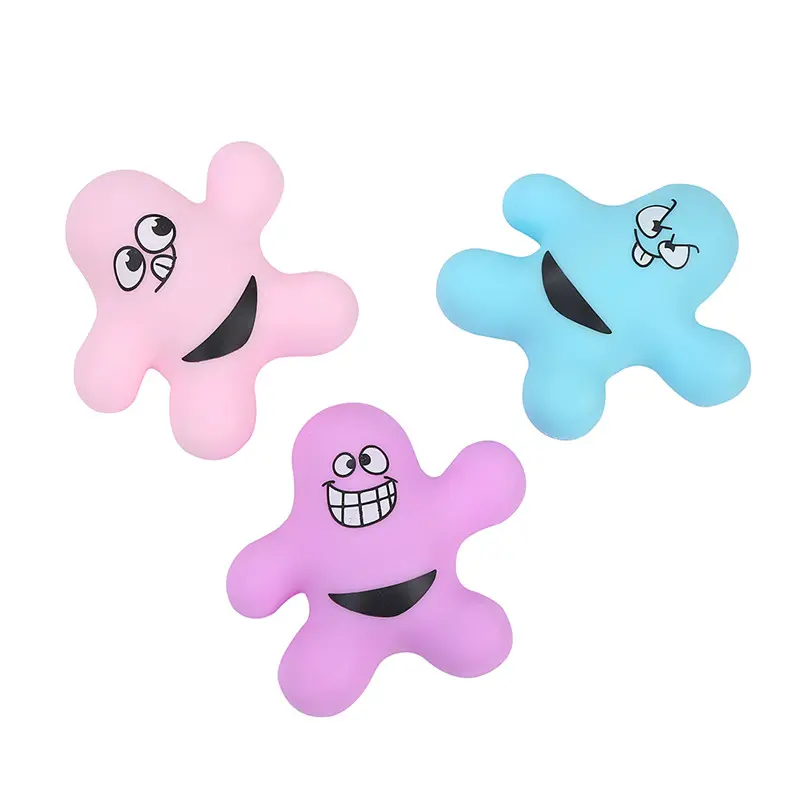
- Custom shaped/animal/3D: determined by mold
Popular Shapes
- Standard round: lowest cost, large print area
- Animal shapes: whale, dolphin, cat, etc., high appeal
- Geometric/3D shapes: cube, oval, meteor hammer, etc.
- Brand IP shapes: fully custom mold available
Filling Options
- PU foam filling
- Gel / starch / bead filling
- Sand / water feel
- LED light-up
- PVA stress relief filling
Note: Filling affects handfeel, weight, and safety standards. Always confirm restrictions in your target market.
Logo Printing Methods Comparison & Effect Guide
1. Pad Printing
- For: curved surfaces, small areas, multi-color logos
- Pros: precise positioning, bright colors
- Limitation: less ideal for complex gradients
2. Screen Printing
- For: large areas, solid-color logos
- Pros: strong adhesion, friction-resistant, low cost
- Limitation: multi-color requires alignment, slightly longer lead time
3. Heat Transfer / Digital Print
- For: full-color, gradient, complex artwork
- Pros: fine detail, premium finish
- Limitation: requires suitable surface
4. Molded Embossed / Integrated Logo
- For: high-end custom, exclusive branding
- Pros: logo never fades, luxury look
- Limitation: mold cost applies, higher MOQ
Buyer recommendation: Pad print or screen print for business gifts—best value; heat transfer for complex designs.
Key Safety Standards & International Certifications
Export stress balls must meet target market regulations for customs and sales:
- EU: EN71-1/2/3, CE, REACH
- US: CPSIA, ASTM F963, CPC
- Social compliance: BSCI, Sedex
- Eco: low VOC, phthalate-free, heavy metal-free
Buyer checklist:
- Require full test reports from supplier
- Confirm materials, inks, and fillings are compliant
- Ensure bulk production matches sample safety level
MOQ, Lead Time & Cost Control
MOQ
- Standard shapes: 500–1000 pcs
- Custom mold: 3000–10000 pcs (depends on complexity)
Lead Time
- Printed custom: 7–15 days
- Mold + production: 25–40 days
Cost Factors
- Material grade
- Size & weight
- Print colors & area
- Order quantity
- Packaging
- Testing & certification
Cost-saving tips:
- Unify material & size in one order
- Reduce print colors
- Choose standard shapes to avoid new mold cost
- Plan ahead to avoid peak-season rush
Design & Sampling Tips
- Provide logo in vector AI/PNG high-res
- Avoid ultra-fine lines and tiny text on curved surfaces
- Confirm color alignment for multi-color prints
- Approve samples for: handfeel, color, elasticity, print position, adhesion
- Sign off sealed samples for bulk inspection
Packaging, Shipping & Storage Recommendations
Packaging
- OPP bag: simple, low-cost, universal
- Color box / header card: gift-ready
- Display box: ideal for retail / trade shows
Shipping
- Stress balls can be compressed packed to save volume and freight
- Ocean and air shipping friendly, not classified as dangerous goods
Storage
- Store in cool, dry place
- Avoid high heat, direct sunlight, heavy pressure
- Use individual packaging for long-term storage to prevent dust and sticking
FAQs
1. Which industries are custom stress balls good for?
Almost all industries: trading, exhibitions, finance, education, medical, tech, e-commerce, automotive, FMCG, etc. A universal promotional gift.
2. What is the minimum order quantity?
Standard shapes: 500 pcs; custom molded shapes: usually 3000 pcs.
3. How to ensure printing does not fall off?
Use pad print/screen print with specialty inks; pass rub test. Use cloth or tape test during sampling.
4. What certifications are needed for EU & US export?
EU: EN71, CE; US: ASTM F963, CPSIA, CPC; many buyers also require BSCI.
5. How long does sampling take?
Standard print sample: 3–5 days; mold sample: 7–10 days.
6. Will they deform during shipping?
Quality PU/TPR has strong recovery. Compressed packs quickly regain shape after opening.
Conclusion
Custom logo stress balls are a low-cost, high-conversion, long-lasting global marketing gift. By controlling four core areas—material, printing, safety standards, and lead time—you can consistently achieve high-satisfaction orders. Whether for trade show leads, staff care, client loyalty, or brand collaboration, they deliver exceptional value and wide audience acceptance.
Post time: Apr-15-2026