Best Materials for Durable Stress Balls (PU, TPR, Silicone)
Stress balls have become one of the most popular portable stress relief products in the global market. For bulk buyers, brand customization customers, and cross-border sellers, choosing the right material directly determines product durability, hand feel, safety, and cost-effectiveness. This article focuses on the three most mainstream high-quality materials: PU, TPR, and Silicone, analyzing their performance, application scenarios, advantages and disadvantages, to help you make accurate purchasing and customization decisions.
Table of Contents
- Why Material Is the Core of Stress Ball Durability
- Detailed Analysis of PU, TPR, Silicone Materials
- Key Performance Comparison of Three Materials
- How to Choose the Right Material for Different Needs
- Durability Maintenance Tips for Stress Balls
- Conclusion
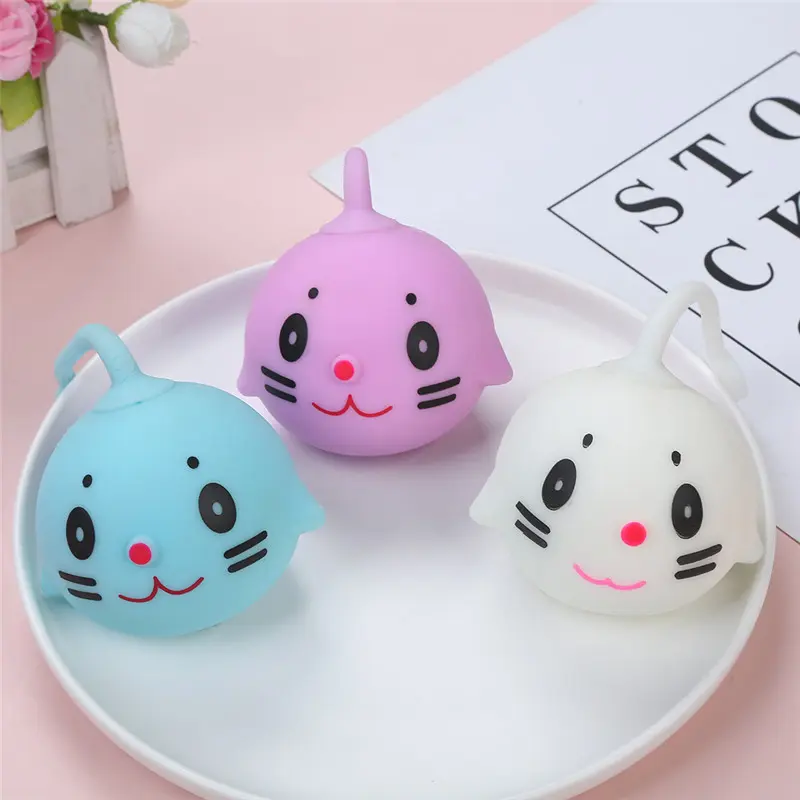
Why Material Is the Core of Stress Ball Durability
A qualified durable stress ball needs to meet multiple requirements: repeated extrusion without deformation, no cracking, no peeling, no odor, safe and non-toxic, and suitable for long-term use. Material determines elasticity, resilience, tear resistance, weather resistance, and service life. Inferior materials tend to harden, crack, or lose elasticity after short-term use, seriously affecting user experience and brand reputation. Therefore, selecting high-quality, stable materials is the top priority for developing competitive stress ball products.
Detailed Analysis of PU, TPR, Silicone Materials
1. PU (Polyurethane)
PU is one of the most widely used traditional materials for stress balls, with mature technology and stable performance.
- Hand feel: Soft, moderate elasticity, slow rebound or fast rebound optional, skin-friendly texture.
- Durability: Good compression resistance, not easy to deform under normal use, suitable for daily extrusion.
- Processability: Easy to shape, supports color printing, logo customization, and surface coating treatment.
- Safety: Generally meets EU CE, EN71, and American CPSIA testing standards, safe for adults and children.
- Disadvantages: Poor water resistance; may harden or crack in long-term high humidity or extreme temperature environments.
Suitable scenarios: Business gifts, student decompression, daily office use, conventional promotional products.
2. TPR (Thermoplastic Rubber)
TPR is a highly cost-effective elastic material, combining the advantages of rubber and plastic, and is very popular in the mid-to-high-end toy market.
- Hand feel: Soft, smooth, non-sticky, good elasticity, quick rebound, comfortable grip.
- Durability: Excellent tear resistance, not easy to break or deform, strong resistance to kneading and stretching.
- Weather resistance: Good temperature resistance, not easy to harden or soften, stable in different environments.
- Cleanliness: Waterproof, washable, not easy to absorb dust and dirt, easy to maintain.
- Processability: Molding fast, supports transparent, translucent, and colorful designs, bright color.
- Disadvantages: Slightly higher cost than ordinary PU; surface is not easy to attach some printing processes.
Suitable scenarios: High-frequency use, long-life requirements, children’s toys, pet toys, cross-border best-selling basic models.
3. Silicone
Silicone is a high-end safe material, representing the top configuration of stress balls, with excellent performance and long service life.
- Hand feel: Ultra-soft, skin-friendly, high toughness, natural and comfortable touch.
- Durability: Super resistance to aging, extrusion, and tearing; can withstand long-term repeated use without fatigue deformation.
- Safety: Food-grade optional, non-toxic, odorless, anti-allergic, fully compliant with international toy safety directives.
- Weather resistance: Wide temperature resistance range, stable in high and low temperature environments, UV resistance.
- Cleanliness: Waterproof, oil-proof, dust-proof, direct washable, long-term use as new.
- Disadvantages: High raw material cost; relatively limited color and style choices for conventional products.
Suitable scenarios: High-end gifts, baby products, medical decompression supplies, brand customized high-value products.
Key Performance Comparison of Three Materials
| Material | Durability | Hand Feel | Safety | Waterproof | Cost | Suitable Groups |
|---|---|---|---|---|---|---|
| PU | Medium | Soft & Comfortable | High | Poor | Low | Daily gifts, promotional items |
| TPR | High | Smooth & Elastic | High | Excellent | Medium | Mass consumer goods, long-life products |
| Silicone | Ultra High | Ultra-soft & Skin-friendly | Highest | Excellent | High | High-end markets, safety-critical users |
How to Choose the Right Material for Different Needs
-
Pursue cost-effectiveness & large-scale customization
Choose PU. Low comprehensive cost, mature production, supports diversified printing and appearance design, suitable for large-volume promotional gifts and basic models.
-
Pursue durability & general market competitiveness
Choose TPR. Balanced performance, long service life, good user experience, high repurchase rate, and is the mainstream choice for cross-border sellers.
-
Pursue top safety & premium positioning
Choose Silicone. High safety, high comfort, high durability, suitable for high-end brands, baby products, and scenarios with strict requirements.
Durability Maintenance Tips for Stress Balls
- Avoid long-term exposure to high temperatures, direct sunlight, and strong chemicals.
- Clean regularly with clean water; do not use strong detergents.
- Avoid sharp objects scratching and excessive pulling.
- Store in a cool, dry, and ventilated environment when not in use.
Conclusion
PU, TPR, and Silicone each have clear positioning and advantages in durable stress balls. PU is cost-effective; TPR balances performance and price; Silicone represents high-end safety and long life. For global buyers, the core is to select matching materials based on target market, user group, budget, and usage scenarios, to create products with stable quality, good experience, and strong competitiveness.
Post time: May-08-2026