Why are stress-relieving squeeze toys for children in Europe and the US so hard to find?
Walking into a toy store in London, the shelves of squeeze toys printed with cartoon whales were already sold out. The sales assistant shook her head helplessly at the parents who had gathered around: “This is the third time we’ve run out of stock this month, and the next batch won’t arrive for another four weeks.” The same scene is playing out in brick-and-mortar stores and Amazon warehouses in New York, Berlin, and Toronto – children’s stress-relieving squeeze toys in the European and American markets are facing a supply-demand imbalance where they are snapped up as soon as they are stocked, and replenishment can’t keep up.
However, this shortage is not merely due to accidental production shortfalls, but rather a market inevitability resulting from a confluence of structural upgrades in demand, product value redefinition, lagging supply-side response, and amplified external dissemination. When we look beyond the surface of the “out of stock”situation, we find profound changes in the European and American children’s consumer market.
I. The Root of Demand: Children’s “Invisible Stress” Creates an Emotional Need, Parents Shift from “Buying Toys” to “Buying Peace of Mind”
In many people’s perception, “stress” is an exclusive label for adults, but the “invisible stress” of children in Europe and the US has long become a widespread social problem. A 2024 report by the British Children’s Mental Health Foundation shows that among 6-12 year olds, 38% experience academic anxiety (such as pressure from standardized tests), and 27% experience emotional fluctuations due to social comparison on social media; data from the US Department of Education indicates that after the pandemic, children’s average daily screen time increased by 1.5 hours, leading to frequent problems such as inattention and irritability.
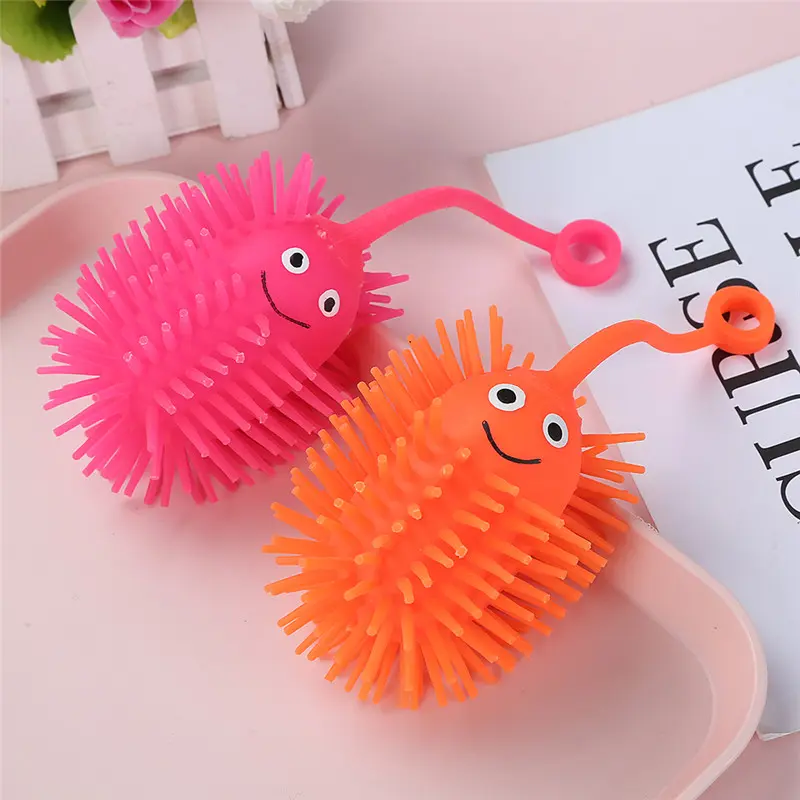
Parents’ sensitivity to these “stress signals” is soaring. Previously, parents’ core motivation for buying toys was to “pass the time” or “develop manual skills,” but now, “whether it can help children manage their emotions” has become the primary consideration. A survey of 2,000 parents by the University of Chicago showed that 72% of respondents said they “are willing to pay a premium of more than 1.5 times for children’s toys with stress-relieving functions,” and 85% of parents listed “emotional regulation” as one of the core needs for children’s products. Children’s stress-relieving squeeze toys perfectly address this unmet need: they require no complex operation, and simply through the tactile feedback of finger kneading (such as the slow rebound of PVA material or the soft texture of silicone), children can release tension through repetitive movements – this “tactile therapy” is especially effective for young children, as they are not yet able to clearly express stress verbally, and physical interaction becomes the most direct emotional outlet. When the demand shifts from “entertainment” to “essential need,” the market naturally experiences explosive growth.
II. Product Logic: “Safety + Interaction + Visual Stress Relief,” Squeeze Toys Become the Optimal Solution for Children’s Emotional Tools
Not all stress-relieving toys can gain a foothold in the children’s market; the “irreplaceability” of squeeze toys is precisely the underlying logic behind their high demand.
First is the suitability of safety standards. European and American safety standards for children’s toys are extremely stringent. Certifications such as EN71 (Europe) and CPSIA (United States) not only require materials to be free of heavy metals and odors, but also have strict regulations on product size (to prevent accidental ingestion) and tear resistance (to prevent fragments from falling off). Squeeze toys mostly use soft materials such as PVA and food-grade silicone, and their shapes are mainly large-sized animals and food (such as whales and buns larger than 10cm), naturally avoiding the “small parts risk,” making them one of the few categories that can simultaneously meet “stress relief function” and “safety standards.” In contrast, stress-relieving toys such as fidget spinners and magnetic putty are limited in their application scenarios in the children’s market due to the risk of small parts or the possibility of accidental ingestion.
Secondly, the visualization of stress relief effects. Children’s perception of “effects” relies more on concrete feedback: the process of the squeeze toy slowly rebounding after being squeezed allows children to intuitively feel the sense of accomplishment of “stress being released”; the soft colors (such as macaron colors and Morandi colors) or slight sounds (such as the “rustling sound” of silicone squeezing) added to some products can also create multi-sensory stimulation, further enhancing the stress relief effect. This “visible and tangible” interaction is more easily accepted by children than abstract “psychological counseling.”
Finally, the universality of the scenarios. Whether in the family living room, school classroom, or the back seat of a car, fidget toys are easily adaptable – they are small and portable, require no power, and don’t create noise to disturb others. This “no scene limitation” characteristic makes them an “emergency tool” for parents to deal with children’s sudden emotional outbursts (such as crying while waiting in line or anxiety after class), further increasing the frequency of demand.
III. Supply Bottlenecks: High Compliance Costs, Slow Response to Market Segmentation, and Difficulty for European and American Domestic Production to Meet Exploding Demand
The explosive growth in demand has collided with multiple barriers on the supply side, directly exacerbating the “supply-demand imbalance.”
1. “Capability Mismatch” in the Domestic Supply Chain
Most European and American domestic toy factories focus on high-end categories (such as Lego-style building blocks and smart toys). These products have high profit margins, long production cycles, and are more in line with the technological advantages of local manufacturing. However, children’s stress-relieving fidget toys are “fast-moving emotional products”—they have a relatively low unit price (mainstream price of $10-20), rapid product updates (requiring frequent introduction of new designs), and production relies on manual sorting (such as checking for material defects), which is incompatible with the “high-cost, automated” production structure of Europe and the United States.
Data shows that domestically produced children’s fidget toys in Europe and the United States account for only 15% of the market supply, with the remaining 85% relying on imports. The import chain faces multiple delays: from production in Asian factories (2-4 weeks), sea transportation (3-5 weeks across the Atlantic), to customs clearance and testing (1-2 weeks for compliance certification review), the entire process takes 2-3 months. Once there is a sudden increase in market demand (such as a certain design becoming popular on TikTok), the supply chain simply cannot keep up.
2. “Entry Barrier” of Compliance Certification
To enter the European and American children’s toy market, products must pass a series of certifications such as EN71 (Europe), CPSIA (United States), and ASTM F963 (US material standards). The testing process alone takes 1-2 months, and the cost of a single certification can reach thousands of dollars. For small and medium-sized factories, this “time + money” investment is a very high barrier to entry—many factories are unable to obtain certification in time, resulting in qualified products not being delivered on time, further compressing the effective supply. More importantly, certification standards are continuously being upgraded. New EU regulations in 2024 require children’s toys to provide an additional “chemical substance migration report,” and the number of testing items for some materials (such as PVA) has increased from 5 to 12. This means that existing production lines need to adjust raw material formulations and update testing equipment, further slowing down the supply speed.
3. “Lagging Response” to Segmented Demand
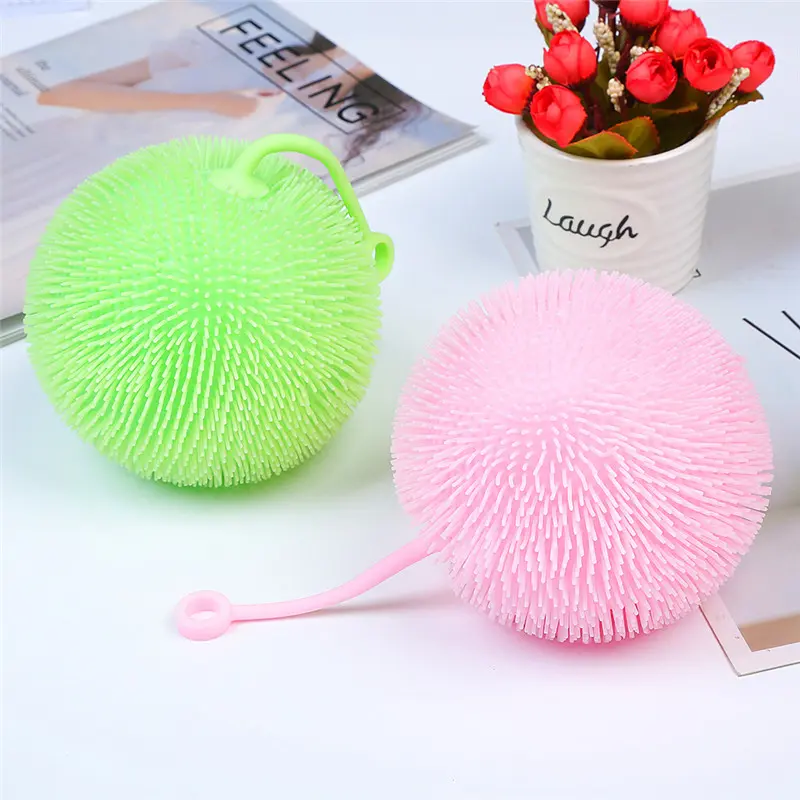
The demand for stress-relieving squeeze toys for children in Europe and the US has shown clear segmentation: younger children aged 3-6 prefer “super soft texture + animal shapes” (such as dolphins and cats), while older children aged 7-12 prefer “DIY models + interactive functions” (such as blank squeeze balls that can be painted, and glowing models with LED lights). However, product development on the supply side remains in the “general model” stage – most manufacturers still focus on standardized animal shapes, and segmented products for different age groups account for less than 20%, leading to a structural shortage where “what people want is unavailable, and what’s available doesn’t sell.”
IV. External Amplification: Social Media and Holiday Consumption Exacerbate Supply and Demand Imbalances
If supply and demand imbalance is the “root cause,” then social media and holiday consumption are the “catalysts” that push the contradiction to the extreme.
1. “Viral Marketing” on Social Media
“Mom communities” on TikTok and Instagram are becoming the core communication channels for children’s toys. A video posted by an American mother on TikTok showing “using a squeeze toy to soothe a crying child” received 2.3 million views in just one week, driving a 300% surge in searches for the same whale-shaped squeeze toy on Amazon; the #KidStressRelief challenge launched by European parenting bloggers attracted over 500,000 users to share scenes of children using squeeze toys, allowing the product to quickly break through “niches” and transform from a “niche stress-relief tool” into a “must-have for parents.”
The characteristic of this “socially driven demand” is “rapid explosion and high peak” – a product that might have been ignored the previous week could experience “million-level” instantaneous demand due to a viral video the following week. However, the “long-cycle response” of the supply chain was completely unable to handle this sudden surge in demand, leaving them helpless as inventory sold out.
2. The “Concentrated Overspending” of Holiday Consumption
Holiday consumption in European and American markets (Christmas, Halloween, Thanksgiving) significantly drives demand for children’s toys. Data shows that 40% of sales in the European and American children’s toy market are concentrated in the fourth quarter, with the six weeks before Christmas being the peak demand period. Children’s stress-relief squeeze toys, due to their “moderate price and strong practicality,” have become the “preferred gift” for parents to give their children—before Christmas 2024, the order volume for children’s squeeze toys on Amazon increased by 220% year-on-year, and some popular styles were already out of stock by mid-November, resulting in unmet demand.
Even more noteworthy is that holiday consumption also triggers a “stockpiling effect”—many parents, to avoid shortages, buy 3-5 different styles of squeeze toys at once, further exacerbating short-term supply pressure.
Conclusion: The essence of supply-demand imbalance is a mismatch in the era of “emotional consumption”
Peeling back the layers of appearances, the “difficulty in obtaining” children’s stress-relief squeeze toys in Europe and America is essentially a profound contradiction between “upgraded emotional demand” and “lagging supply-side response”:
Parents’ demands for children have upgraded from “satisfying entertainment” to “managing emotions,” while market supply remains at the stage of “producing generic toys”; social media propagation makes demand exhibit “instantaneous explosive” characteristics, while the “long-cycle, high-threshold” nature of traditional supply chains simply cannot adapt quickly; consumers’ triple demands for “safety + segmentation + effectiveness” further raise the supply threshold, leading to a scarcity of high-quality products.
Post time: Feb-04-2026