Material Safety Standards for Stress Ball Toys: The Importance of FDA-Certified Materials for Food-Contact Grade Stress Balls
In the global children’s stress-relief toy market, stress balls have become a popular choice in European and American families, schools, and rehabilitation settings due to their soft texture, strong stress-relieving properties, and portability. However, for these frequently held products that are easily touched and put in children’s mouths, material safety has long surpassed “toy compliance” and risen to the level of food contact protection. FDA certification is the authoritative benchmark for this safety line, determining whether a product can enter the mainstream global market and whether it can truly protect children’s health.
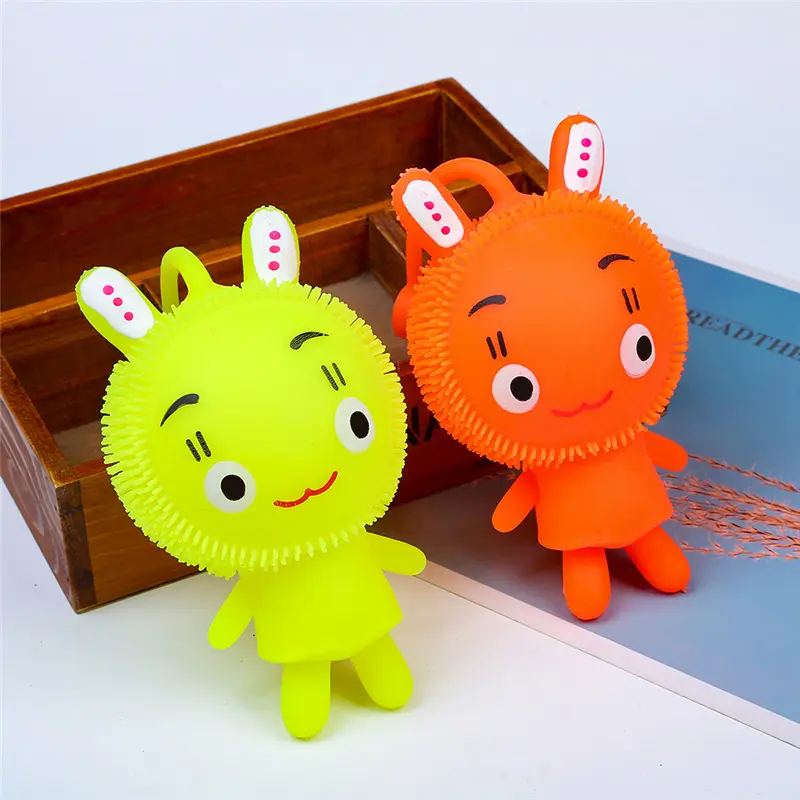
I. Clarifying: Why Children’s Stress Balls Must Meet “Food Contact Grade” Standards
Children use stress balls in far more scenarios than ordinary toys: prolonged holding in the palm of their hands, rubbing and squeezing, continuous contact of sweat and oils with the surface; young children are prone to biting and licking; some stress balls are given as gifts, souvenirs, or even placed in the same setting as food and meals. These high-frequency, close-range, and easily ingested characteristics amplify the material risks of stress balls. Ordinary toy materials may release heavy metals, plasticizers, harmful monomers, and odor-causing substances; long-term contact can cause skin allergies and respiratory discomfort, and ingestion can directly threaten the digestive and nervous systems.
The core logic of food-contact grade materials is to simulate the stringent conditions of direct contact with food, requiring that the material, under normal use, repeated friction, and slight saliva contact, does not migrate harmful substances, produce toxic decomposition products, or affect health. This is precisely the safety level that children’s stress balls need most, not just meeting basic toy physical strength requirements.
II. FDA Certification: The “Global Safety Passport” for Food-Contact Grade Stress Balls
The FDA (U.S. Food and Drug Administration) has established a complete regulatory system for food contact materials, with its core basis being 21 CFR Parts 174-179, which clearly defines polymers, elastomers, additives, colorants, etc., and is the globally recognized gold standard for food contact materials.
For stress balls, FDA food contact grade certification signifies completion of three rigorous verifications:
Ingredient Compliance:Raw materials, additives, and pigments are all on the FDA’s permitted list, prohibiting high-risk plasticizers, heavy metals, and harmful monomers;
Migration Testing:In environments simulating sweat, saliva, and oil, the migration of harmful substances is far below the safety threshold, eliminating the risk of chronic penetration;
*Stability and Durability:Under repeated compression, stretching, and temperature changes, the material does not decompose, release odors, or shed fibers, maintaining a long-term safe state.
This is not just a “nice-to-have,” but a mandatory requirement for exporting children’s stress-relief toys to Europe and America and entering mainstream channels, and a direct demonstration of a brand’s safety strength.
III. FDA Food Contact Grade: Four Core Values for Children’s Stress Balls
1. Health Protection: Cutting Off Chemical Risks at the Source
Low-quality stress balls often use recycled materials, inferior plasticizers, and substandard pigments, causing rashes and itching in the short term, and posing a cumulative risk of harm in the long term. FDA food-contact grade materials are subject to strict risk control from the formulation stage, being free of BPA, phthalates, heavy metals, and harmful volatile substances. Even if children accidentally bite or have prolonged contact, the health risks are minimized, making them suitable for use in homes, schools, rehabilitation centers, and other scenarios.
2. Market Access: The Compliance Hard Currency of Cross-Border Trade The United States, Canada, and many European and American markets enforce strict regulations on children’s handheld and easily ingested toys. Products that do not meet FDA food contact standards are highly susceptible to customs detention, platform removal, and recall penalties, resulting not only in lost goods but also severe damage to brand reputation. Having FDA certification is equivalent to obtaining a safe passage for cross-border circulation, significantly reducing compliance risks and increasing channel trust.
3. Consumer Trust: A Key Decision Point for Global Parents When overseas families purchase children’s toys, safety certification takes a much higher priority than price and style. The FDA food contact label is a direct signal for parents to quickly determine whether a toy is suitable for their child’s long-term play. At the same price point, FDA-certified stress balls are more likely to gain favor, supporting higher premiums and repeat purchases, thus forming a stable reputation barrier.
4. Long-lasting Quality: Enhanced Durability and Safety Food-grade materials have a purer and more stable formula, resulting in stress balls with advantages such as uniform rebound, resistance to breakage, leak-proofness, and colorfastness. They do not age or release harmful substances with long-term use, balancing stress relief with safety, meeting the dual demands of overseas markets for toys that are both durable and safe.
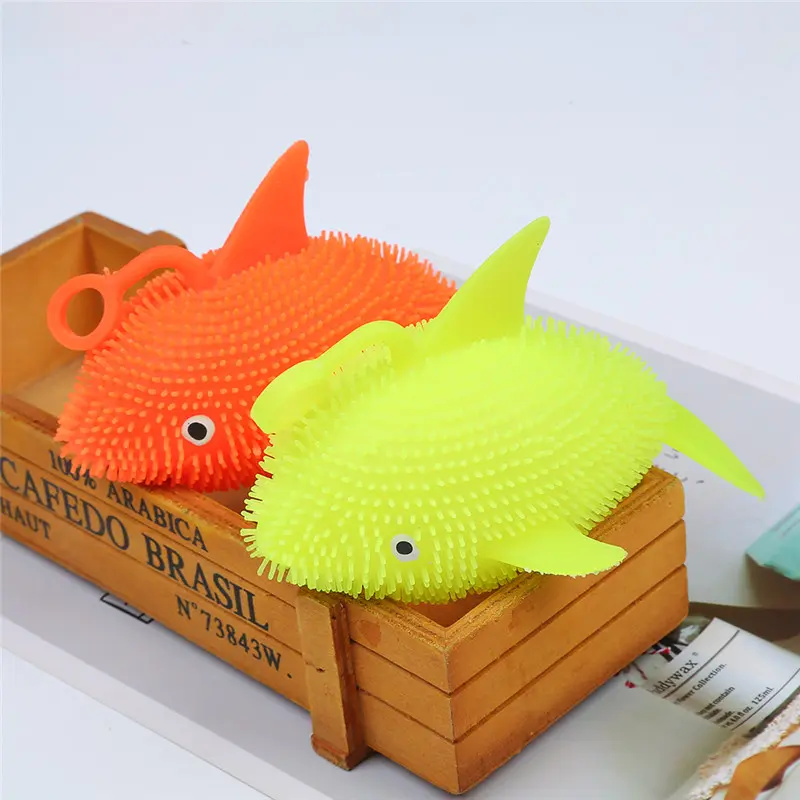
IV. How to Identify Genuine FDA Food-Contact Stress Balls
For global sourcing and consumption, three points can be used for quick identification:
Check certification basis: Clearly state compliance with FDA 21 CFR regulations, rather than vaguely stating “passed testing”;
Check testing reports: Provide authoritative third-party migration testing and component analysis reports, covering all aspects of materials, pigments, and additives;
Check material performance: No pungent odor, smooth surface that does not fade, does not seep oil after repeated rubbing, and is not sticky.
Post time: Mar-20-2026