A Guide to Avoiding Pitfalls in Exporting Stress Ball Toys
As a brand specializing in the R&D and production of stress-relieving toys, XIAOTAOQI has been deeply involved in the stress ball toy industry for over two decades. We understand that stress ball toys, due to their material properties, are prone to deformation and breakage during export transportation. This not only affects product appearance but also directly impacts overseas customer experience and brand reputation. Based on the physical characteristics of stress ball toys and the characteristics of the entire international logistics chain, this article outlines a professional anti-deformation packaging solution and logistics selection strategy for cross-border practitioners, helping stress ball toys arrive safely worldwide.
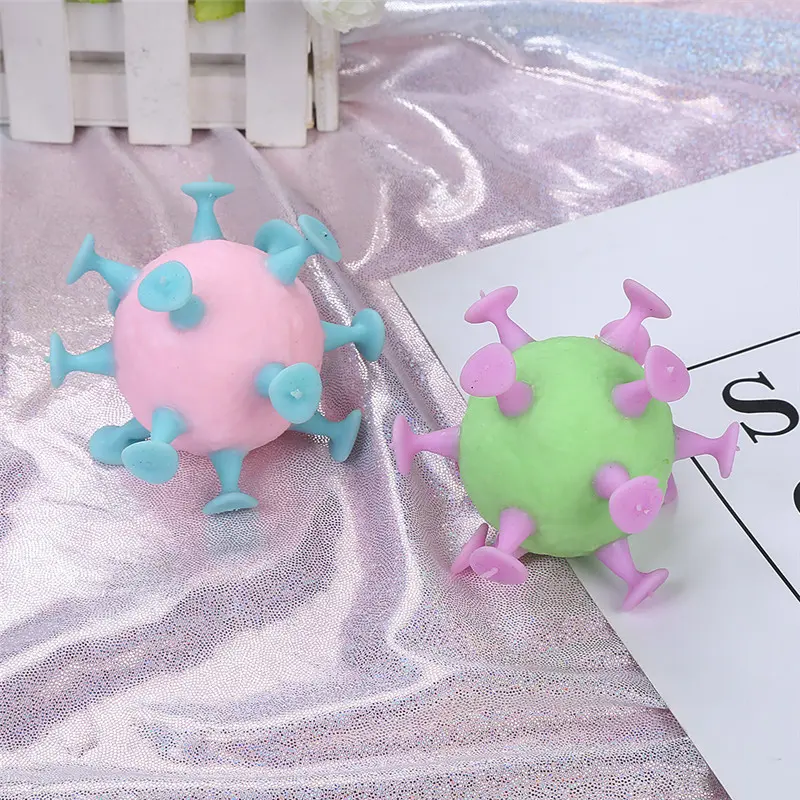
I. The Core Pain Point of Stress Ball Toy Export Transportation: Why Are They Prone to Deformation?
The core filling materials of stress ball toys include PVA, starch, beads, pectin, sand, and water, while the outer shell is mostly made of soft, elastic plastic. These products lack a rigid supporting structure. Under the long-distance bumps, container stacking and compression, and rough handling during transshipment and unloading in international transportation, they are highly susceptible to problems such as deformation, uneven distribution of filling materials, and leakage due to shell damage. Furthermore, the compression resistance of pressure balls varies significantly depending on the filling material. For example, water-filled and pectin-filled balls are more prone to shell damage after compression, while starch-filled and bead-filled balls are more susceptible to internal material clumping due to compression. Both types of compression impair the product’s functionality and aesthetics, becoming a core challenge in export transportation.
II. Comprehensive Anti-Compression Deformation Packaging Techniques: Layered Protection from Inner Packaging to Outer Packaging
Given the material characteristics of pressure ball toys, export packaging must adhere to the principle of **”Independent Protection + Cushioning Filling + Rigid Outer Box + Standardized Fixing”**. Adjustments should be made flexibly according to the product style and filling material to achieve comprehensive compression protection while ensuring packaging compliance with international shipping weight, size, and environmental requirements.
(I) Inner Packaging: Individual product protection to prevent cross-contamination.
Individual Sealed Packaging: All stress ball toys are individually packaged in food-grade PE sealed bags. This not only prevents moisture and leakage during transportation but also provides basic elastic protection, avoiding surface scratches and deformation caused by friction and compression between individual items. For water-filled or PVA-material soft stress balls, thickened frosted PE bags can be used to improve tear resistance.
Customized Inner Tray Fitting: For uniquely shaped stress balls (such as animal shapes, geometric shapes, starfish/shark shapes, etc.), custom-made blister trays or EVA foam trays are used. Precisely molded according to the product’s contours, the product is embedded in a fixed position, preventing displacement and compression during transportation. This is especially suitable for protecting high-value customized and LED-filled stress balls.
Single-item cushioning packaging: For regular pressure balls and puff balls without a fixed shape, wrap them individually with bubble wrap. Choose bubble wrap with a thickness of ≥30μm. The number of wrapping layers should be adjusted according to the product’s softness or hardness; 2-3 layers for soft-filled products and 1 layer for hard bead-filled products. After wrapping, lightly secure with tape to prevent the bubble wrap from falling off.
(II) Intermediate packaging: Inner box partitioning for cushioning and dispersing internal pressure
Partitioned inner box design: Use corrugated cardboard inner boxes or plastic partitioned boxes. Arrange the individually packaged pressure balls according to quantity, with only 1-2 products in each compartment. This prevents products from stacking and colliding within the box, dispersing the pressure during transportation. The inner box size is precisely customized according to the product size, leaving ≤1cm of cushioning space to prevent excessive space from causing product shaking. Internal cushioning of the inner box: Environmentally friendly cushioning materials such as bubble wrap, pearl cotton granules, and kraft paper shreds are filled into the gaps of the inner box. Biodegradable kraft paper shreds and cornstarch foam are preferred, meeting the environmental packaging requirements of Europe, the United States, and the European Union. Fill until there are no obvious gaps to avoid overfilling and causing the inner box to expand and deform.
(III) Outer Packaging: Reinforced rigid outer box to improve overall compression resistance. High-hardness corrugated cardboard box selection: Export outer boxes use five-layer AA-grade corrugated cardboard boxes (double-walled), with BC flute being the preferred type, combining impact resistance and compression resistance, suitable for container stacking and transportation; outer box weight ≥200g/㎡, bursting strength ≥1800kPa, edge crush strength ≥8000N/m, improving the compression resistance of the outer box from the basic material level. Outer Carton Dimensions and Load-Bearing Capacity: The outer carton dimensions are designed based on the number of inner boxes, adhering to the principle of “smaller cartons for larger shipments.” The gross weight of each carton is controlled within 15kg to avoid damage during loading and unloading due to excessive weight. The length, width, and height ratio of the outer carton are moderate, avoiding long, thin, or flat cartons to reduce deformation caused by uneven stress during transportation.
Outer Carton Reinforcement: A cross-sealing method is used at the outer carton closure, employing high-adhesion sealing tape ≥5cm wide to ensure a secure seal. Plastic or paper corner protectors are added to the four corners of the carton to prevent damage caused by collisions and compression during transshipment and loading/unloading, further enhancing the structural stability of the outer carton.
Moisture Prevention and Labeling: Place desiccant (silica gel desiccant, 50g/100g pack depending on box size) inside the box to prevent product softening due to moisture during sea and cross-border transportation; prominently display internationally recognized shipping labels such as “Fragile,” “Crush Away,” “Handle with Care,” and “Head Up” on the outer box, along with the product name, quantity, and gross/net weight to remind logistics personnel to handle the product correctly.
(IV) Upgraded Packaging Solution for Pressure Balls with Special Filling Materials: Pressure balls with different filling materials require targeted packaging optimization to precisely address the transportation challenges of various materials:
Water/Pectin Filling: In addition to the independent PE bag packaging, add an aluminum foil sealing bag for double leak prevention; use rigid foam for the inner tray to secure the product and distribute pressure, reducing the load per box by 30% and preventing crushing damage due to excessive box weight.
LED Light Filling: In addition to regular cushioning, add anti-static pearl cotton between the product and the inner tray to prevent static electricity from damaging electronic components during transportation; the outer box is also labeled “Anti-static.” PVA/Soft Plastic Version: Vacuum-sealed packaging (moderate vacuuming to avoid excessive vacuuming leading to product deformation) reduces product volume while increasing compression resistance, suitable for large-volume transportation.
III. Logistics Selection Strategy for Stress Ball Toy Exports: Matching Product Characteristics and Choosing Compliant and Efficient Logistics Channels
The choice of logistics channels directly affects the transportation loss rate of stress ball toys. It requires comprehensive consideration of the destination country/region, product volume, transportation time, and the operational standards of the logistics channel. Prioritize logistics service providers with professional transportation solutions for fragile and soft products, while also considering the channel’s customs clearance capabilities and cost-effectiveness, reducing the risk of compression deformation from the source of the transportation chain.
(I) Choosing Logistics Channels Based on Cargo Volume: Differentiated Selection for Small Batch LCL and Large Batch FCL Small Batch LCL (≤200kg): Prioritize international express lines (DHL/FedEx/UPS premium lines) or cross-border e-commerce lines (air freight/sea parcel). International express lines have fewer transit points and more standardized loading and unloading operations, effectively reducing product compression. Cross-border e-commerce lines offer a dedicated channel for fragile items, where logistics providers offer additional cushioning and reinforcement services, suitable for sample orders and small-batch customized orders.
For large-volume full container loads (≥1 20GP/40GP): Full container load (FCL) shipping is used to avoid the stacking and compression of different goods in less-than-container-load (LCL) shipping (LCL shipments are prone to heavy goods crushing lighter goods, leading to severe deformation of stress ball toys). FCL shipping allows for independent planning of cargo placement within the container, placing stress ball toy boxes in the middle layer, and placing hard, low-weight products on the upper and lower layers to distribute stacking pressure. Simultaneously, choosing a reputable shipping company ensures the quality of container transport and avoids cargo damage due to container deformation.
(II) Core Selection Criteria for Logistics Service Providers
Experience in Fragile Goods Transportation: Prioritize logistics service providers with experience in cross-border transportation of toys, soft goods, and fragile items. These providers are familiar with the characteristics of stress ball toys and will arrange professional personnel for transshipment and loading/unloading to reduce rough handling. Some high-quality providers can also offer customized packaging reinforcement services to further enhance protection.
Comprehensive Logistics Tracking and Claims System: Choose channels that provide full-chain logistics tracking to monitor the cargo’s transportation status in real time and intervene promptly in case of transshipment anomalies. Simultaneously, confirm the logistics provider’s claims terms, clearly defining the standards and procedures for compensation for compression deformation and breakage, reducing economic losses from transportation damage.
Compliant Customs Clearance Capabilities: Stress ball toys are children’s toys, and exports to different countries/regions must comply with local toy safety standards (such as EU EN71, US CPSIA/CPC, UK BSCI, etc.). Logistics service providers must be familiar with the destination’s customs clearance requirements and be able to assist in providing customs clearance documents to avoid long-term storage of goods at ports/airports due to customs delays, increasing the risk of compression and breakage. High-quality overseas warehousing support (optional): If using an overseas warehousing stocking model, choose an overseas warehouse with professional toy storage management. Overseas warehouses will store fragile items separately during loading, unloading, and storage, avoiding stacking and compression within the warehouse. Additionally, overseas warehouses have shorter last-mile logistics, significantly reducing the probability of product damage.
(III) Logistics Channel Compatibility for Different Destinations
Europe and America (EU, USA, Canada): The EU requires EN71 and BSCI certification, and the US requires CPSIA/CPC certification. Full Container Load (FCL) or dedicated air freight (for fragile items) is preferred. Logistics service providers in Europe and America have standardized operations, resulting in lower loss rates for FCL shipments. Dedicated air freight is suitable for orders with high time requirements.
Southeast Asia, Japan and South Korea: Shorter transportation distances and fewer transshipment links allow for international express or LCL (least container load) shipping (specifically for fragile items). When LCL shipping, require the logistics provider to combine stress ball toys with lighter goods to avoid compression of heavy goods.
Middle East, Latin America, and Africa: Logistics infrastructure in some countries is weak, and loading and unloading operations are relatively rough. Therefore, full container load (FCL) shipping should be prioritized, with double reinforcement of the packaging. Simultaneously, logistics service providers with local customs clearance agents should be selected to shorten clearance time and reduce losses from storage in local warehouses.
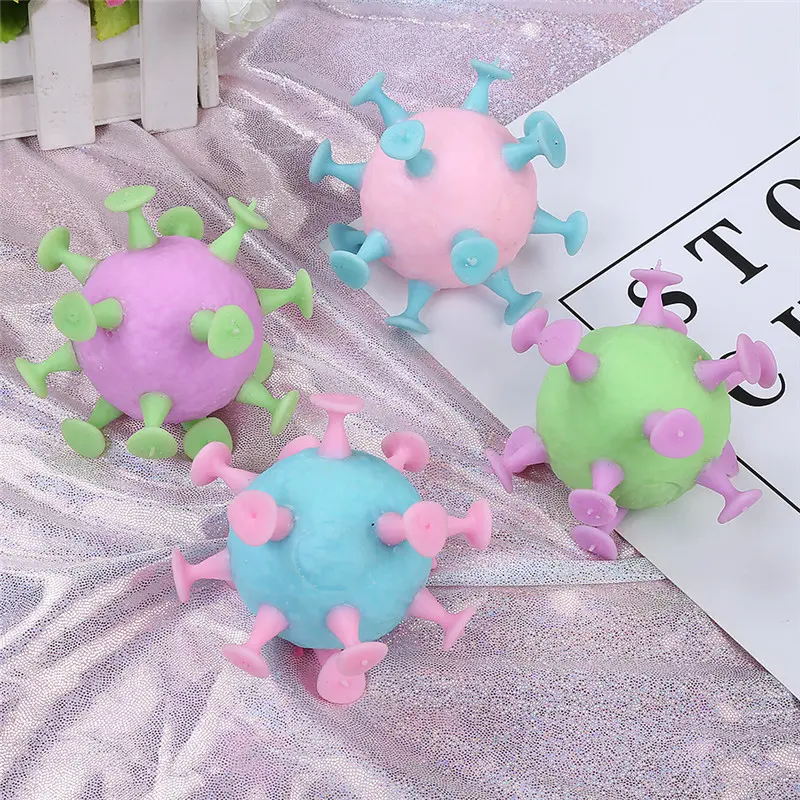
IV. Additional Precautions for Exporting Stress Ball Toys
Packing Standards: Heavy at the Bottom, Light at the Top, Evenly Distributed: Whether packing in full container or less-than-container load (LCL), follow the principle of “heavy goods at the bottom, light goods on top.” Place stress ball toy boxes in the middle or upper layers to avoid being piled up with heavier goods. Distribute goods evenly within the box to prevent tilting or compression caused by uneven weight distribution.
Packaging Inspection: Simulate Transportation Environment for Compression Testing: Before large-scale shipments, take samples for simulated transportation compression testing. Place the packaged products on a pressure testing machine to simulate the compressive force of stacked containers (the typical container stacking pressure is approximately 300 kg/m²). Test the packaging’s resistance to compression. If product deformation occurs, optimize the packaging plan accordingly.
Complete documentation: Product characteristics and protection requirements clearly stated: Bills of lading, packing lists, and other logistics documents should indicate “Contains pressure ball toys; soft and easily squeezed, handle with care,” reminding all logistics personnel to pay attention to product characteristics and operate according to regulations.
Environmental compliance: Matching destination packaging requirements: The EU, UK, Canada, and other regions implement environmental packaging regulations requiring packaging materials to be biodegradable and recyclable. Avoid using non-biodegradable plastic cushioning materials and prioritize the use of kraft paper, cornstarch foam, and biodegradable bubble wrap to prevent customs clearance delays due to non-compliant packaging.
Post time: Mar-04-2026